

The History of AGC’s Products and Core Technologies
Technology has always been our priority. We are continually focused on the sophistication of our products and advanced technology. The core technologies that AGC has nurtured in the fields of glass, electronics, chemistry, and ceramics are unparalleled in the world.
Core Technologjes
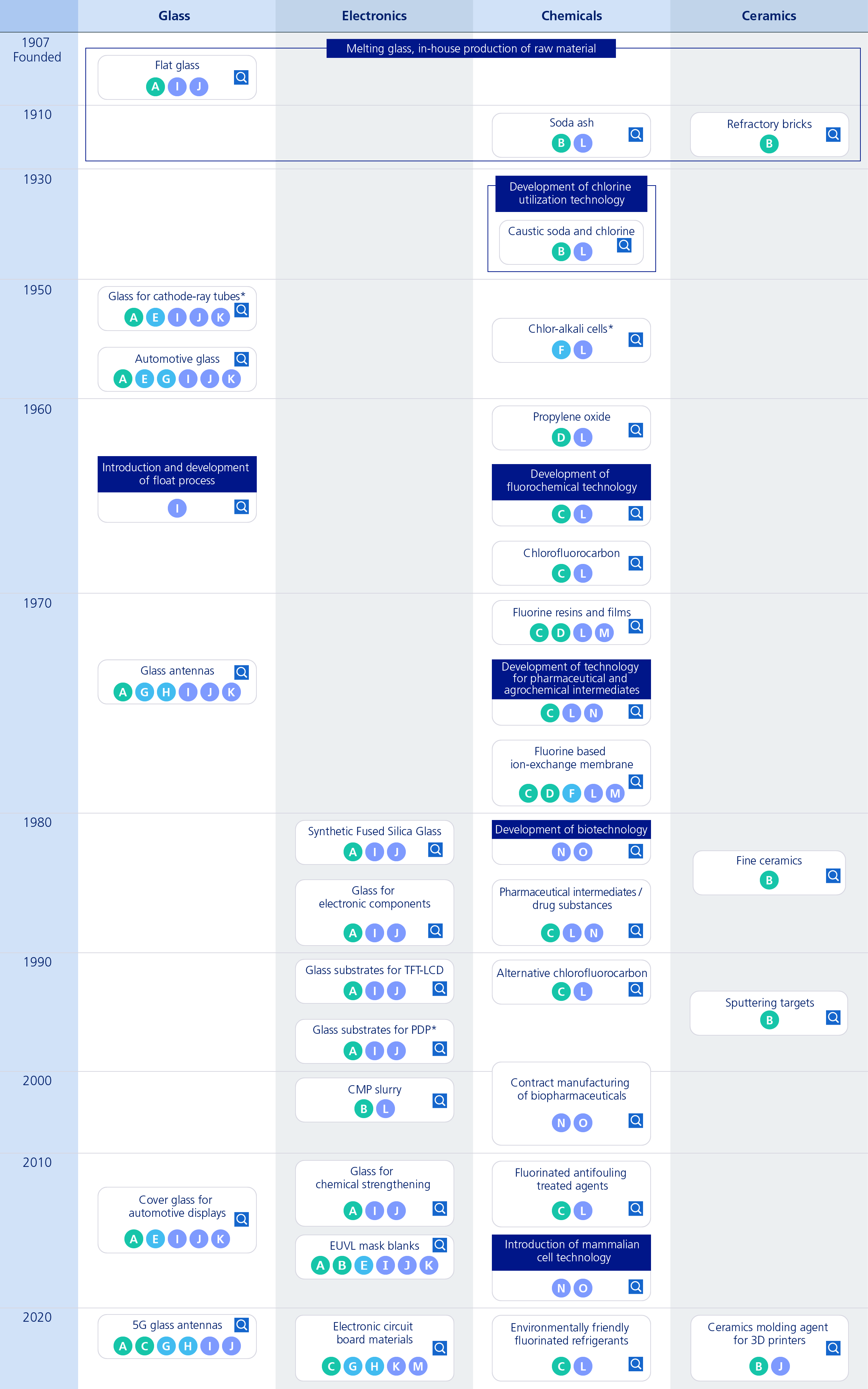
History of Our Core Technologies
※ Click on the  mark to see the meanings of symbols relating to our core technologies.
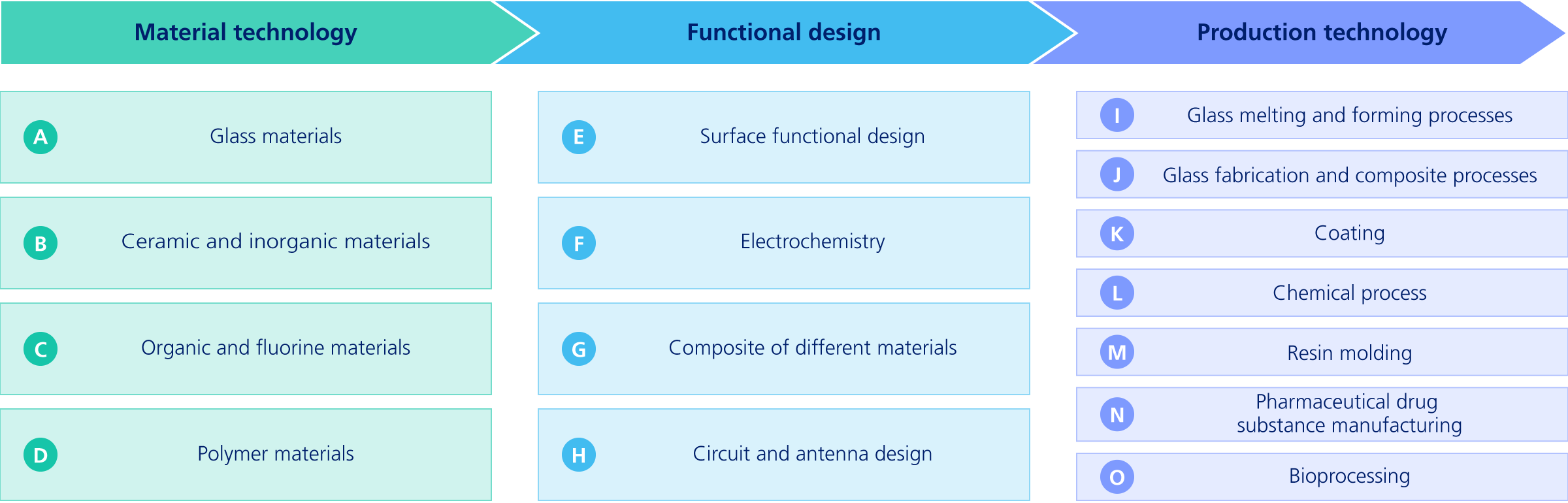
 Glass materials
 Glass melting and forming processes
 Glass fabrication and composite processes
 Ceramic and inorganic materials
 Chemical process
- Ceramic and inorganic materials
- Ceramic and inorganic materials
- Chemical process
- Glass materials
 Surface functional design
- Glass melting and forming processes
- Glass fabrication and composite processes
 Coating
- Glass materials
- Surface functional design
 Composite of different materials
- Glass melting and forming processes
- Glass fabrication and composite processes
- Coating
 Electrochemistry
- Chemical process
 Polymer materials
- Chemical process
 Organic and fluorine materials
- Chemical process
- Organic and fluorine materials
- Chemical process
- Glass melting and forming processes
- Organic and fluorine materials
- Polymer materials
- Chemical process
 Resin molding
- Organic and fluorine materials
- Chemical process
 Pharmaceutical drug substance manufacturing
- Organic and fluorine materials
- Polymer materials
- Electrochemistry
- Chemical process
- Resin molding
- Pharmaceutical drug substance manufacturing
 Bioprocessing
- Glass materials
- Composite of different materials
 Circuit and antenna design
- Glass melting and forming processes
- Glass fabrication and composite processes
- Coating
- Glass materials
- Glass melting and forming processes
- Glass fabrication and composite processes
- Glass materials
- Glass melting and forming processes
- Glass fabrication and composite processes
- Glass materials
- Glass melting and forming processes
- Glass fabrication and composite processes
- Glass materials
- Glass melting and forming processes
- Glass fabrication and composite processes
- Organic and fluorine materials
- Chemical process
- Pharmaceutical drug substance manufacturing
- Organic and fluorine materials
- Chemical process
- Pharmaceutical drug substance manufacturing
- Bioprocessing
- Organic and fluorine materials
- Chemical process
- Glass materials
- Surface functional design
- Glass melting and forming processes
- Glass fabrication and composite processes
- Coating
- Glass materials
- Organic and fluorine materials
- Composite of different materials
- Circuit and antenna design
- Glass melting and forming processes
- Glass fabrication and composite processes
- Ceramic and inorganic materials
- Chemical process
- Glass materials
- Glass melting and forming processes
- Glass fabrication and composite processes
- Glass materials
- Ceramic and inorganic materials
- Surface functional design
- Glass melting and forming processes
- Glass fabrication and composite processes
- Coating
- Organic and fluorine materials
- Composite of different materials
- Circuit and antenna design
- Coating
- Resin molding
- Pharmaceutical drug substance manufacturing
- Bioprocessing
- Organic and fluorine materials
- Chemical process
- Ceramic and inorganic materials
- Ceramic and inorganic materials
- Ceramic and inorganic materials
- Glass fabrication and composite processes
Succeeded in domestic production of flat glass with a sense of challenge and mission
When AGC was founded in 1907, modernization was progressing and many buildings were being constructed and demand for window glass increased.But since flat glass could not be manufactured domestically, Japan relied on imports from Europe. The switch to the domestic production of flat glass was extremely difficult, and although many of our predecessors took on the challenge, they did not succeed. Born into a Mitsubishi family, Toshiya Iwasaki took on the challenge of this difficult business with a sense of mission: “I want to accomplish something for the people living in this country.” Toshiya, who had experienced studying chemistry at the University of London, introduced technology from Belgium and succeeded in the switch to domestic production. The founding spirit of taking on the challenge of difficulties and supporting the world with materials and open innovation are still alive and well at AGC today.
Converted supply disruptions caused by World War I into “internal production x business diversification”
World War I made it impossible to import soda ash, a raw material for glass, and refractory bricks, which are essential for glass melting furnaces. Although AGC faced this business continuity crisis soon after its founding, its sense of mission to continue supplying glass domestically led it to work on its own production of soda ash and refractory bricks, thereby establishing a self-sufficient system. This sense of mission and response to crisis became the cornerstone of our current Chemicals and Ceramics businesses and the model for a strong business portfolio that will survive changing times.
Collaboration on “Glass Antenna” + “5G Glass Antenna” with customers
The automotive industry is currently undergoing the “CASE” paradigm shift (Connected, Autonomous, Shared & Services, Electric) and the importance of vehicle communication functions is increasing. In 1970, at the dawn of the radio industry, the spread of radio required antennas, but the pole antennas of the time presented challenges in terms of design and breakage, so glass antennas were sought. AGC did not have antenna technology, but with the belief that future automobiles would surely require communication capabilities, we gathered amateur radio operators within the Company and successfully developed products from scratch.
Even in recent years, we succeeded in a world-first demonstration test of 5G communication antennas in the millimeter wave band, which is required for even faster communication, jointly with telecommunications carriers and equipment manufacturers.
These can be described as examples of ambidextrous development (2), activities that anticipate future needs and create innovative new products in co-creation with customers.
From development of technology for pharmaceutical and agrochemical intermediates using fluorine technology to bio-CDMO
In the 1970s, it became known that fluorine-containing compounds showed high bioactivity and good efficacy as pharmaceuticals and agrochemicals. AGC also began development from around 1975 using fluorination technology and precision fluorine compound synthesis technology cultivated over many years, and for more than 40 years we have provided contract services from development to manufacturing of pharmaceutical and agrochemical intermediates, APIs and active ingredients matched to the needs of customers. In particular, we support customers with strict quality control and stable production adapted to cGMP (Current Good Manufacturing Practice) for pharmaceuticals, and our synthetic pharmaceuticals business is growing steadily.
From the 1980s on, we also introduced biotechnology and developed unique ASPEX* technology using fission yeast. Later, in the 2000s, we acquired Biomeva, CMC and other companies, obtaining manufacturing technologies that use microorganisms and mammalian cells, and expanded our biopharmaceutical business as AGC Biologics.
* Asahi Glass Schizosaccharomyces pombe Expression System (a protein expression system using the fission yeast Schizosaccharomyces pombe, independently developed by AGC when it was still Asahi Glass)
From development of technology for pharmaceutical and agrochemical intermediates using fluorine technology to bio-CDMO
In the 1970s, it became known that fluorine-containing compounds showed high bioactivity and good efficacy as pharmaceuticals and agrochemicals. AGC also began development from around 1975 using fluorination technology and precision fluorine compound synthesis technology cultivated over many years, and for more than 40 years we have provided contract services from development to manufacturing of pharmaceutical and agrochemical intermediates, APIs and active ingredients matched to the needs of customers. In particular, we support customers with strict quality control and stable production adapted to cGMP (Current Good Manufacturing Practice) for pharmaceuticals, and our synthetic pharmaceuticals business is growing steadily.
From the 1980s on, we also introduced biotechnology and developed unique ASPEX* technology using fission yeast. Later, in the 2000s, we acquired Biomeva, CMC and other companies, obtaining manufacturing technologies that use microorganisms and mammalian cells, and expanded our biopharmaceutical business as AGC Biologics.
* Asahi Glass Schizosaccharomyces pombe Expression System (a protein expression system using the fission yeast Schizosaccharomyces pombe, independently developed by AGC when it was still Asahi Glass)
Realization of extremely high quality requirements through a long-term product development and combination of core technologies
EUV mask blanks are the original plate material for cutting-edge semiconductor lithography using light with a very short wavelength of 13.5 nm (extreme ultraviolet light) and are indispensable for the manufacture of cutting-edge semiconductors such as AI-chip. Exceptionally high quality is required and only two manufacturers in the world are capable of supplying the product. AGC has been following the roadmap of semiconductors and continued to develop from a long-term perspective since the days of the previous generation of excimer-laser lithography. In 2003, we were approached by SEMATECH, an American consortium developing semiconductor manufacturing technology, when it launched a project to develop EUV lithography technology, and development began in earnest. We succeeded in mass production in 2017 using the synthetic quartz technology, polishing technology and coating technology that we have cultivated over many years.
Collaboration on “Glass Antenna” + “5G Glass Antenna” with customers
The automotive industry is currently undergoing the “CASE” paradigm shift (Connected, Autonomous, Shared & Services, Electric) and the importance of vehicle communication functions is increasing. In 1970, at the dawn of the radio industry, the spread of radio required antennas, but the pole antennas of the time presented challenges in terms of design and breakage, so glass antennas were sought. AGC did not have antenna technology, but with the belief that future automobiles would surely require communication capabilities, we gathered amateur radio operators within the Company and successfully developed products from scratch.
Even in recent years, we succeeded in a world-first demonstration test of 5G communication antennas in the millimeter wave band, which is required for even faster communication, jointly with telecommunications carriers and equipment manufacturers.
These can be described as examples of ambidextrous development (2), activities that anticipate future needs and create innovative new products in co-creation with customers.
- Business discontinued